Torts

Why Are Unliquidated Damages So Important in Tort Law?

Spread the love

Spread the love      When trying to understand what makes a tort unique among civil wrongs, one phrase stands out:“A tort is redressible by an action for unliquidated damages.”But what does this mean in practice, and why does it matter? Let’s break it down. What Are Unliquidated Damages? In simple terms, unliquidated damages are sums of money awarded by […]


Spread the love

Why Are Unliquidated Damages So Important in Tort Law? Read More »
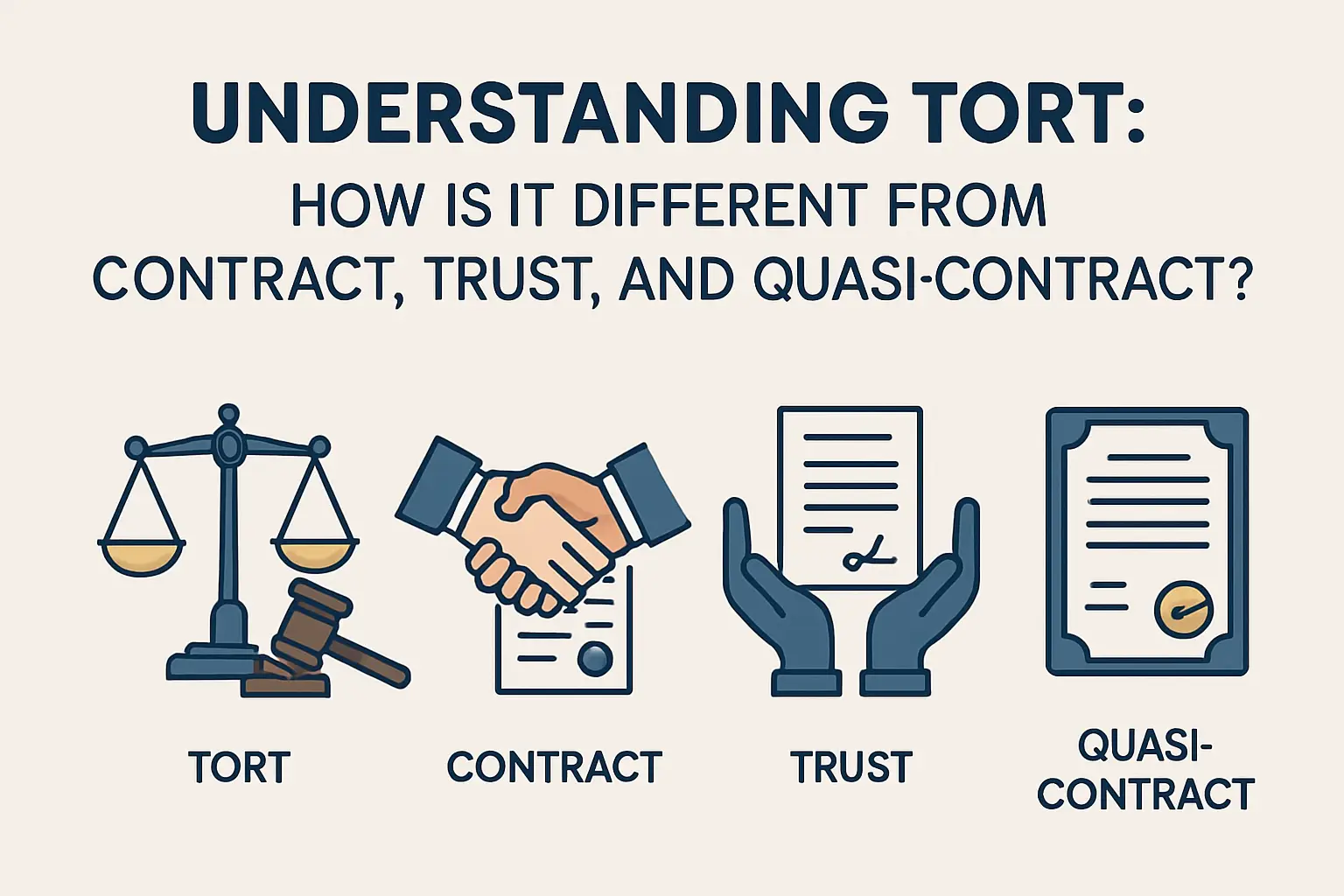
Understanding Tort: How Is It Different from Contract, Trust, and Quasi-Contract?

Spread the love

Spread the love      The phrase “This civil wrong is other than a mere breach of contract or breach of trust” often comes up in law books, but what does it really mean? It gets to the heart of what makes a tort unique among other civil wrongs. Let’s break down how tort law is defined by what it is—and what


Spread the love

Understanding Tort: How Is It Different from Contract, Trust, and Quasi-Contract? Read More »

The Nature of Tort: A Civil Wrong with Evolving Principles

Spread the love

Spread the love      When we hear about legal disputes, we often think of crime and punishment, but not every legal wrong is a crime. Some are civil wrongs—those acts that violate a person’s private rights, rather than the rights of society as a whole. In law, these are called torts. What Exactly Is a Tort? The word


Spread the love

The Nature of Tort: A Civil Wrong with Evolving Principles Read More »

CONSTITUENTS OF TORT

Spread the love

Spread the love      The law of torts functions as a tool to encourage individuals to act responsibly and to respect the rights and interests of others. It achieves this by safeguarding certain recognized interests and enabling those whose interests are unjustly violated to seek compensation from those responsible for such breaches. The term “interest” refers to


Spread the love

CONSTITUENTS OF TORT Read More »

Difference between Tort and Crime

Spread the love

Spread the love      Tort and crime are fundamentally distinct branches of law, each concerned with different kinds of rights, remedies, and objectives. Core Differences Statutory Context and Judicial Interpretation Judicial Perspective The Bombay High Court has elucidated the difference through the lens of sanctions and purpose:“In the case of a crime, the sanction is punishment; in


Spread the love

Difference between Tort and Crime Read More »

Tort and Quasi-Contract

Spread the love

Spread the love      Quasi-contracts arise in situations where the law imposes liability on a person to compensate another, not because of an explicit agreement, but due to the receipt of money or benefits to which the other party has a superior claim. The underlying principle is to prevent unjust enrichment—no person should unjustly profit at another’s expense.


Spread the love

Tort and Quasi-Contract Read More »

Tort and Contract

Spread the love

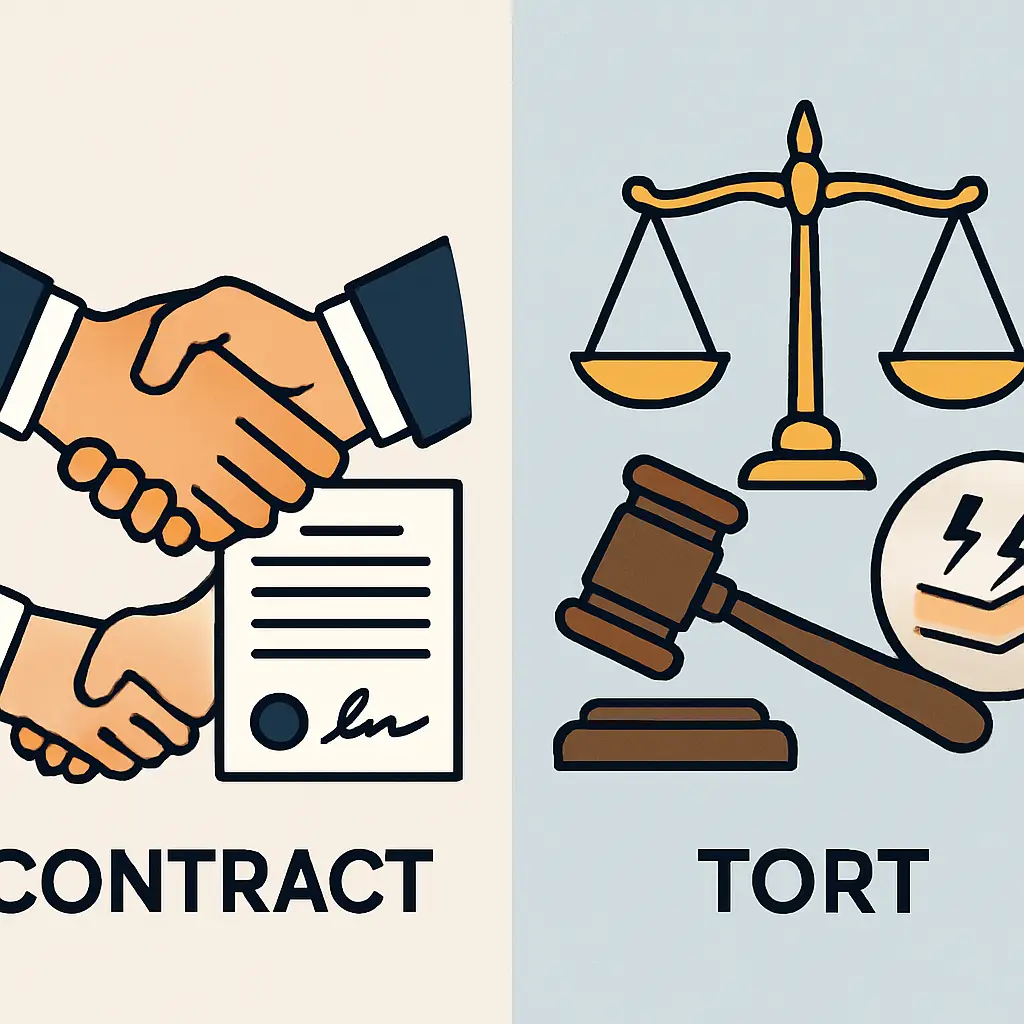
Spread the love      Tort and contract law form two major fields within civil law, each governed by distinct principles and addressing different types of legal duties. Foundational Differences A contract is based on mutual agreement between the parties—consent forms its foundation. By contrast, a tort occurs irrespective of the victim’s consent; tortious acts are often committed


Spread the love

Tort and Contract Read More »

Definition of Tort

Spread the love

Spread the love      The word “tort” has its roots in French, where it translates to the English term “wrong,” and is equivalent to the Roman law concept of “delict.” It entered English legal vocabulary through the influence of Norman jurists. Originating from the Latin “tortum,” meaning “twisted,” the term refers to actions or conduct that deviate


Spread the love

Definition of Tort Read More »

Development of Tort Law in India: A Historical Overview

Spread the love

Spread the love      Historically, the concept of torts under Hindu and Muslim law was limited in comparison to its broad interpretation in English law. In these indigenous legal systems, responding to crimes took precedence over the compensation for private wrongs. The contemporary framework of Indian tort law, in contrast, owes much of its shape to the


Spread the love

Development of Tort Law in India: A Historical Overview Read More »