Lawful Consideration and Lawful Object (Section 23)

A contract might have all the technical essentials—offer, acceptance, and consideration—but if its purpose is illegal or immoral, the law will not touch it. Section 23 of the Indian Contract Act, 1872, acts as a filter to stop agreements that are harmful to society. 1. Section 23 Explained The section states that the consideration or

Lawful Consideration and Lawful Object (Section 23) Read More »

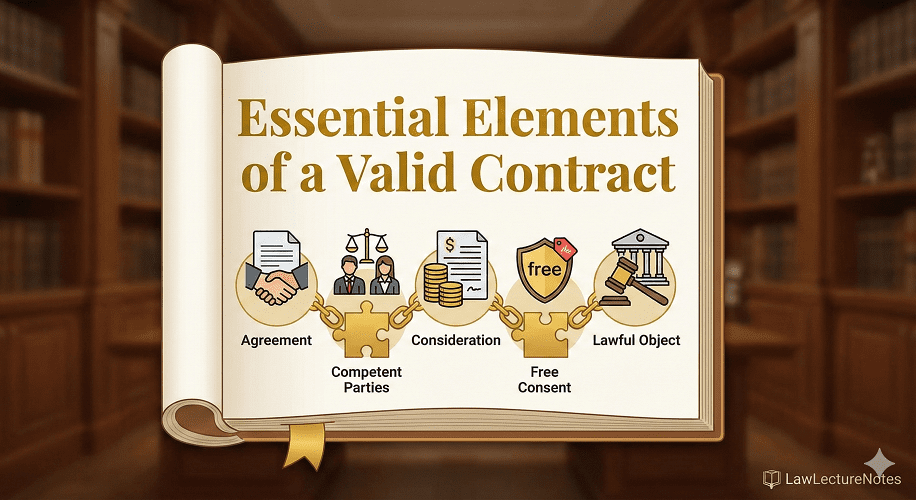
Essential Elements of a Valid Contract (Section 10)

For an agreement to become a contract, it must pass the “validity test” laid down in Section 10 of the Indian Contract Act, 1872. If any of these elements is missing, the contract may be void, voidable, or illegal. Section 10 states: “All agreements are contracts if they are made by the free consent of

Essential Elements of a Valid Contract (Section 10) Read More »

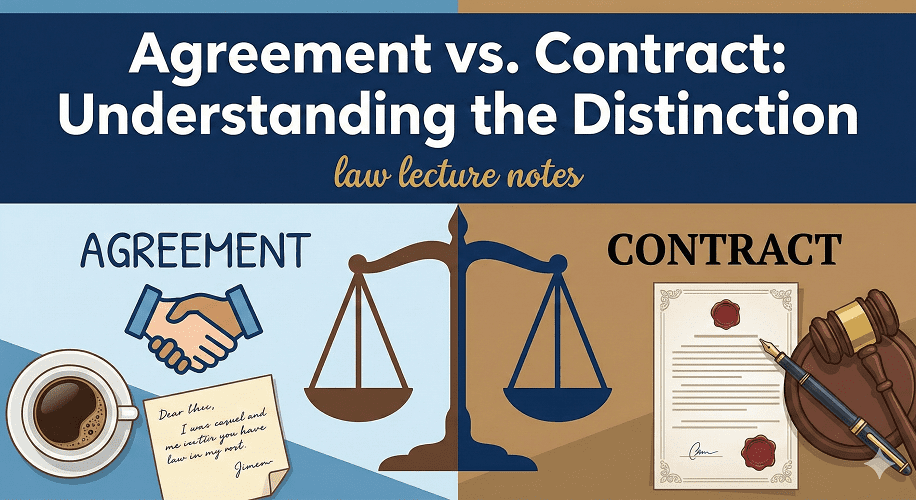
Agreement vs. Contract: Understanding the Distinction

While the terms “agreement” and “contract” are often used interchangeably in daily conversation, in the eyes of the law, they have distinct meanings.1 As the legal maxim goes: “All contracts are agreements, but all agreements are not contracts.” 1. Definition of Agreement (Section 2(e)) The Indian Contract Act defines an agreement in Section 2(e) as:

Agreement vs. Contract: Understanding the Distinction Read More »

Introduction to the Indian Contract Act, 1872

The Indian Contract Act, 1872 is the bedrock of mercantile law in India. Whether buying vegetables from a vendor, boarding a bus, or signing a multi-million dollar corporate deal, we enter into contracts daily. This Act determines the circumstances under which promises made by the parties to a contract shall be legally binding. This article

Introduction to the Indian Contract Act, 1872 Read More »