
Uncategorized

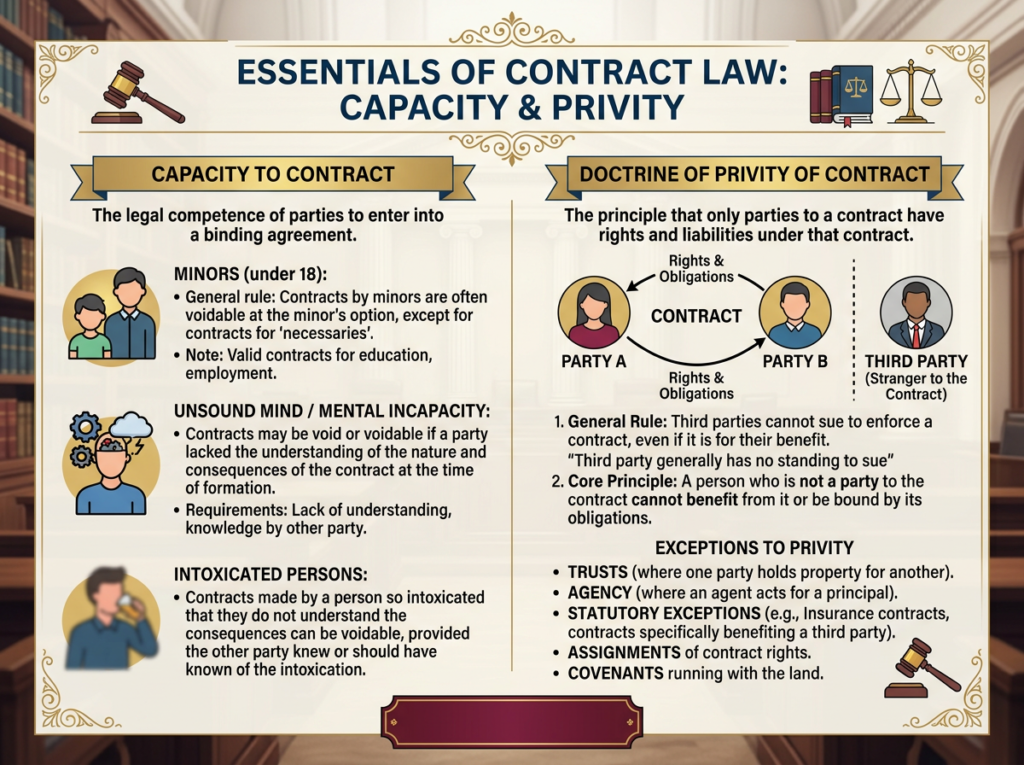
Capacity and privity of contract legal study

Capacity to Contract and Doctrine of Privity of Contract

Spread the love

Spread the love      Introduction For a contract to be legally enforceable, the parties entering into it must have the legal capacity to contract. Mere consent between two persons is not sufficient. The law requires the parties to possess the necessary legal competence to understand and undertake contractual obligations. Section 11 of the Indian Contract Act, 1872


Spread the love

Capacity to Contract and Doctrine of Privity of Contract Read More »

Indian Contract Act, 1872 beside signed contract marked Accepted and Signed

Acceptance under the Indian Contract Act, 1872 – Meaning, Rules, Communication & Case Laws

Spread the love

Spread the love      Introduction Acceptance is the second essential stage in the formation of a contract. An offer by itself does not create a contract. The person to whom the offer is made must signify his assent to the proposal in accordance with the law. Section 2(b) of the Indian Contract Act, 1872 provides: “When the


Spread the love

Acceptance under the Indian Contract Act, 1872 – Meaning, Rules, Communication & Case Laws Read More »

Contract proposal under Indian Contract Act 1872 offers ten Lenovo laptops for INR 750,000.

Offer (Proposal) under the Indian Contract Act, 1872

Spread the love

Spread the love      Introduction An offer, called a proposal under the Indian Contract Act, 1872, is the starting point of a contractual relationship. Before a contract can generally be formed, one party must communicate a willingness to enter into a legal relationship and invite the assent of the other party. Section 2(a) of the Indian Contract


Spread the love

Offer (Proposal) under the Indian Contract Act, 1872 Read More »

Types of Contracts under the Indian Contract Act, 1872

Spread the love

Spread the love      Introduction The Indian Contract Act, 1872 recognizes different types of contracts based on the manner in which they are created, their validity, the extent to which they have been performed, and the obligations undertaken by the parties. Understanding the classification of contracts is important because the legal rights and remedies of the parties


Spread the love

Types of Contracts under the Indian Contract Act, 1872 Read More »