We have now journeyed through the basics of the Indian Contract Act, 1872—from the first spark of an Offer to the binding seal of Acceptance, and the crucial rules of Communication.
Chapter 1 (Sections 1–9) is not just an introduction; it is the foundation upon which the entire superstructure of mercantile law is built. Without this chapter, the rest of the Act (Indemnity, Guarantee, Agency, etc.) would collapse.
1. Why Chapter 1 is Foundational
In any legal dispute regarding a business deal, the court asks one primary question before anything else: “Was there a contract?”
Chapter 1 provides the tools to answer this question.
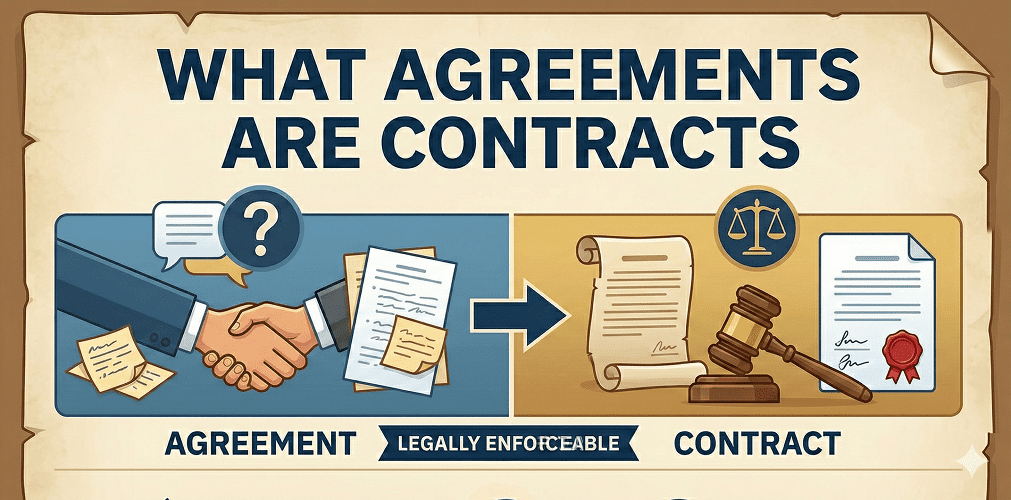
- The “Litmus Test” for Enforceability: It distinguishes between a casual promise (like promising to call a friend) and a binding legal obligation. Without the rules of Section 10 (Free Consent, Competency, Consideration), the courts would be flooded with frivolous cases.
- Determining the “Point of No Return”: The rules of Communication and Revocation (Sections 3, 4, & 5) precisely define the moment parties are locked into a deal. This certainty is essential for commerce.
- Uniformity: It replaces local customs and vague understandings with a standardized set of rules (Offer + Acceptance = Agreement) that applies to everyone, from a street vendor to a multinational corporation.
2. Practical Relevance in Daily Life
You might think Contract Law is for lawyers and businessmen in suits, but in reality, you enter into dozens of contracts every day. Chapter 1 governs them all.
A. The Morning Commute (Implied Offer)
When you board a public bus or metro, you don’t sign a document. However, the bus running on the road is an Implied Offer to take you to your destination for a fare. By stepping in, you give Implied Acceptance. If you refuse to pay, you breach the contract.
B. Shopping at a Mall (Invitation to Offer)
When you see a shirt with a price tag of ₹1,000, Chapter 1 tells you this is an Invitation to Offer. You cannot force the shopkeeper to sell it if it’s mislabeled. You make the Offer at the cash counter, and they have the right to Accept or reject it.
C. Online Shopping (Communication of Acceptance)
When you click “Buy Now” on Amazon, are you buying the item or offering to buy it?
- Usually, your order is an Offer.
- The email saying “Order Confirmed” is the Acceptance.
- The rules of Communication (Section 4) ensure that the contract is valid even though the seller is in Bangalore and you are in Delhi.
D. “Terms and Conditions” (Standard Form Contracts)
Every time you click “I Agree” on an app, you are signing a contract. The principles of Notice (Lalman Shukla v. Gauri Datt) dictate that you must have the opportunity to read the terms for them to be binding.
3. Summary of Key Concepts
| Concept | The Core Lesson |
| Offer (Proposal) | The starting point. It must be definite and communicated. |
| Acceptance | The “Yes” that creates the bond. It must be absolute and unconditional. |
| Consideration | The “Price” of the promise. No consideration, no contract. |
| Intention | The secret ingredient. Parties must intend to be legally bound (Balfour v. Balfour). |
Final Thoughts
Mastering Chapter 1 is like learning the alphabet before writing a novel. If you understand Offer, Acceptance, and Consideration, you can solve 80% of the practical problems in contract law.
As we move to the next chapters, remember: A contract is only as strong as its foundation. If the offer was vague, or the acceptance was conditional, or the consideration was missing, no amount of legal argument can save the deal.
Important articles
-
 January 22, 2026
The Blueprint of a Binding Deal: Overview of Essential Elements of a Valid Contract
Spread the love In the world of commerce, thousands of promises are made every day. But when does a casual promise transform into a legally bindingRead more -
January 24, 2026
What Agreements Are Contracts? Decodifying Section 10
Spread the love In our daily lives, we make countless agreements. We agree to meet friends for coffee, agree to attend a family wedding, or agreeRead more -
January 24, 2026
Conclusion: The Importance of Chapter 1 in Contract Law
Spread the love We have now journeyed through the basics of the Indian Contract Act, 1872—from the first spark of an Offer to the binding sealRead more