Proposal (Offer) – Section 2(a)

The starting point of any contract is a Proposal, commonly known as an Offer. Without a valid offer, there can be no acceptance, and consequently, no contract. 1. Meaning of Proposal The term “Proposal” is defined under Section 2(a) of the Indian Contract Act, 1872: “When one person signifies to another his willingness to do … Read more
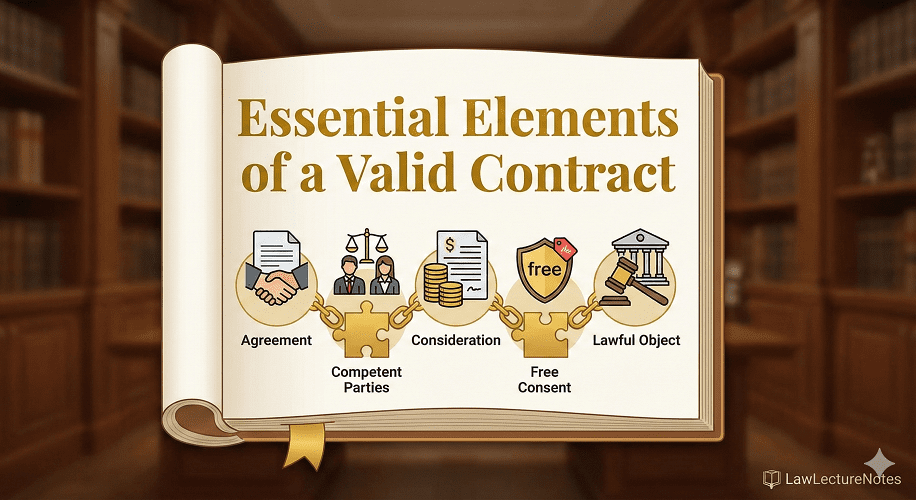
Essential Elements of a Valid Contract (Section 10)

For an agreement to become a contract, it must pass the “validity test” laid down in Section 10 of the Indian Contract Act, 1872. If any of these elements is missing, the contract may be void, voidable, or illegal. Section 10 states: “All agreements are contracts if they are made by the free consent of … Read more

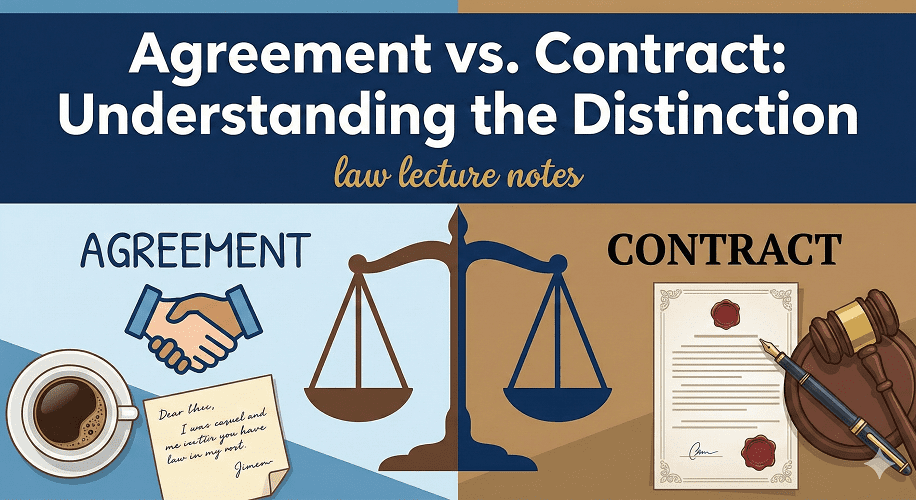
Agreement vs. Contract: Understanding the Distinction

While the terms “agreement” and “contract” are often used interchangeably in daily conversation, in the eyes of the law, they have distinct meanings.1 As the legal maxim goes: “All contracts are agreements, but all agreements are not contracts.” 1. Definition of Agreement (Section 2(e)) The Indian Contract Act defines an agreement in Section 2(e) as: … Read more

Meaning and Definition of a Contract

To understand the Indian Contract Act, one must first grasp its core concept: the Contract itself. In layman’s terms, a contract is a promise that the law will enforce. However, in the legal world, the definition is more specific. 1. What is a Contract? A contract is an agreement between two or more parties that … Read more

Introduction to the Indian Contract Act, 1872

The Indian Contract Act, 1872 is the bedrock of mercantile law in India. Whether buying vegetables from a vendor, boarding a bus, or signing a multi-million dollar corporate deal, we enter into contracts daily. This Act determines the circumstances under which promises made by the parties to a contract shall be legally binding. This article … Read more

The Evolution of Hindu Succession Law: From Patriarchy to Parity

Hindu Marriage

Hindu succession law has witnessed a dramatic transformation over the last century, marked by its journey from deeply entrenched patriarchy to progressive gender equality. Rooted in ancient scriptures and traditional customs, the Hindu law of inheritance historically relegated women to a subordinate position. However, several waves of legislation have challenged and changed that landscape, making women’s … Read more

Introduction: The Living Legacy of Hindu Law

Hindu Marriage

The Living Legacy: Understanding the Sources of Hindu Law Hindu law is one of the world’s oldest and most fascinating legal traditions. Steeped in ancient wisdom yet remarkably adaptable, it has evolved over millennia—from its roots in divine revelation to its present-day codified form. Let’s unravel how Hindu law was shaped, examining both its ancient … Read more

Why Are Unliquidated Damages So Important in Tort Law?

When trying to understand what makes a tort unique among civil wrongs, one phrase stands out:“A tort is redressible by an action for unliquidated damages.”But what does this mean in practice, and why does it matter? Let’s break it down. What Are Unliquidated Damages? In simple terms, unliquidated damages are sums of money awarded by a court … Read more

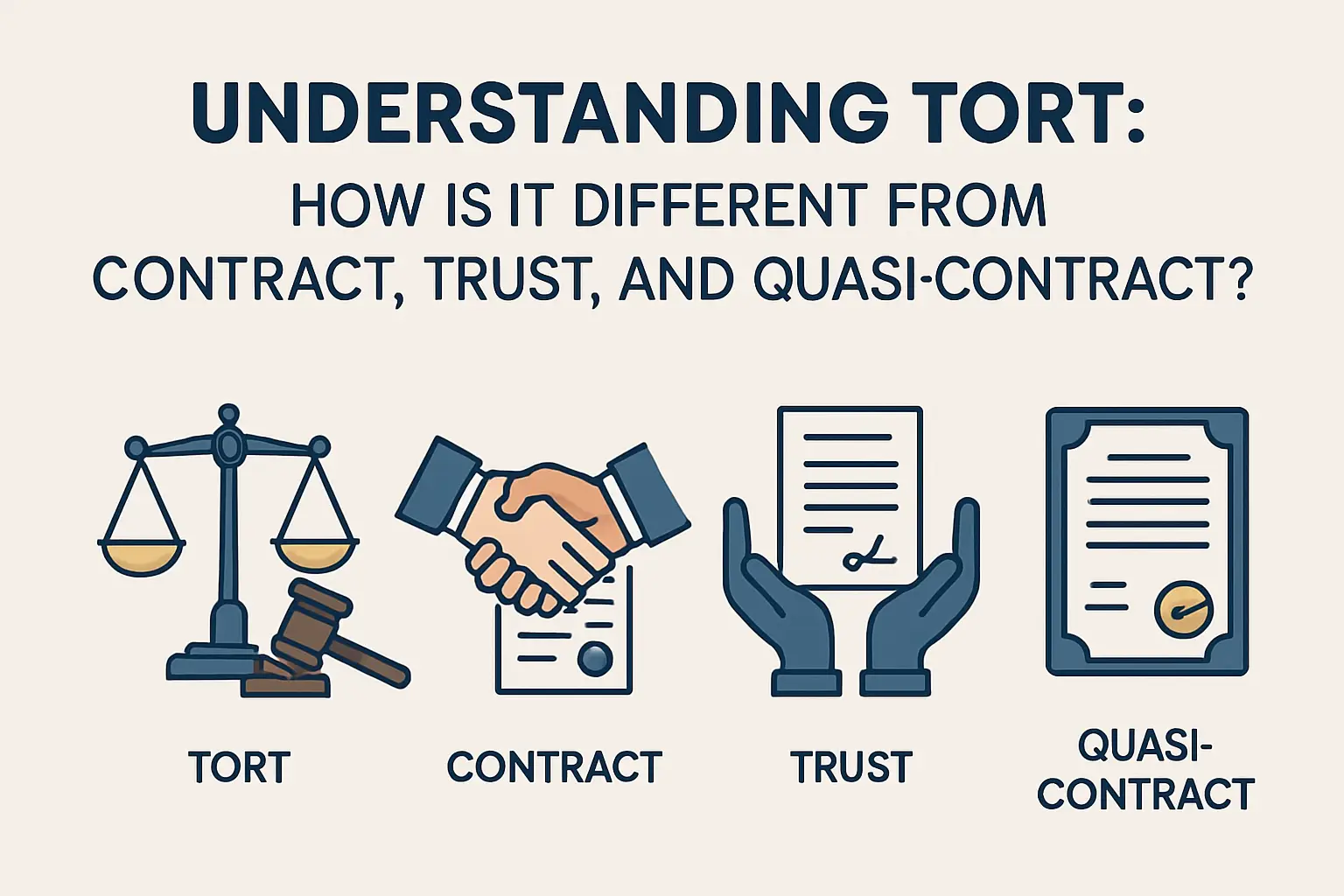
The Nature of Tort: A Civil Wrong with Evolving Principles

When we hear about legal disputes, we often think of crime and punishment, but not every legal wrong is a crime. Some are civil wrongs—those acts that violate a person’s private rights, rather than the rights of society as a whole. In law, these are called torts. What Exactly Is a Tort? The word “tort” comes … Read more