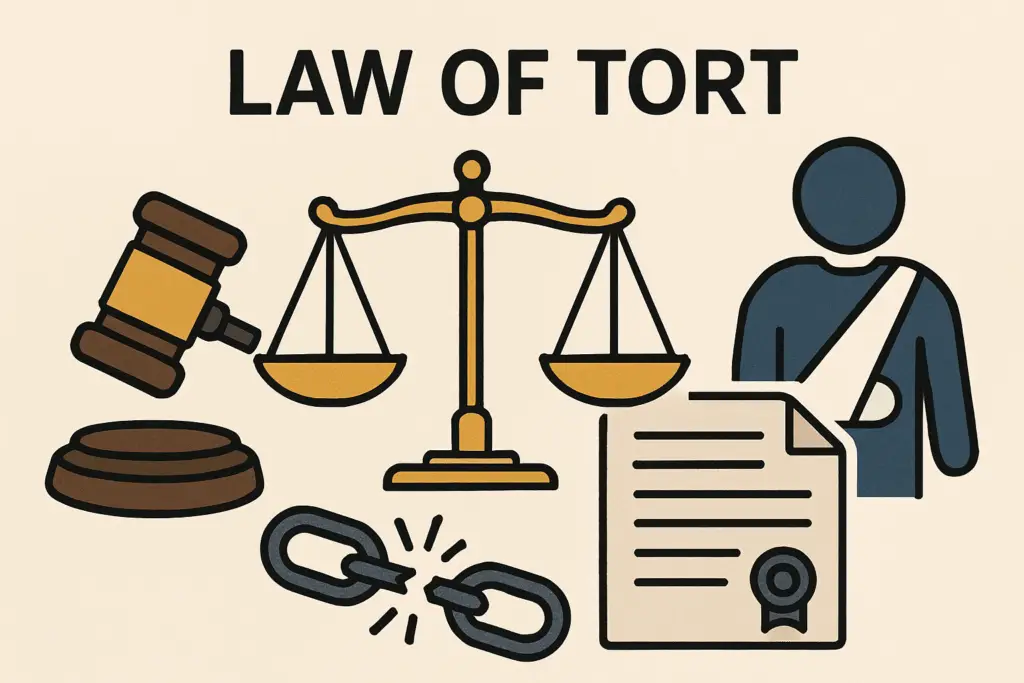
CONSTITUENTS OF TORT

The law of torts functions as a tool to encourage individuals to act responsibly and to respect the rights and interests of others. It achieves this by safeguarding certain recognized interests and enabling those whose interests are unjustly violated to seek compensation from those responsible for such breaches. The term “interest” refers to any claim, … Read more

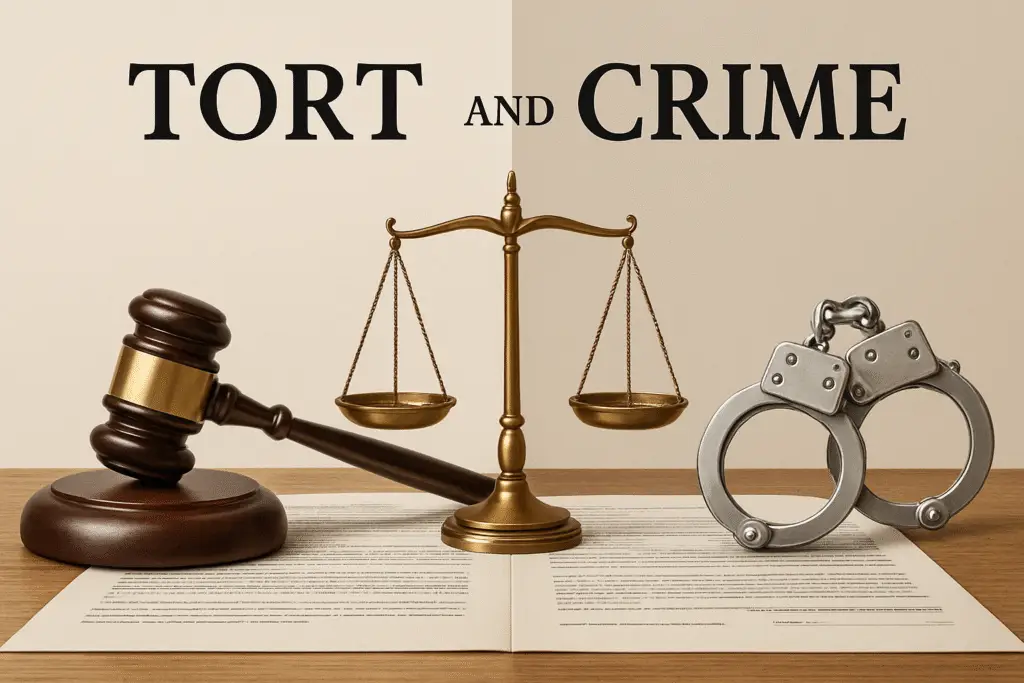
Difference between Tort and Crime

Tort and crime are fundamentally distinct branches of law, each concerned with different kinds of rights, remedies, and objectives. Core Differences Statutory Context and Judicial Interpretation Judicial Perspective The Bombay High Court has elucidated the difference through the lens of sanctions and purpose:“In the case of a crime, the sanction is punishment; in torts or … Read more

Tort and Quasi-Contract

Quasi-contracts arise in situations where the law imposes liability on a person to compensate another, not because of an explicit agreement, but due to the receipt of money or benefits to which the other party has a superior claim. The underlying principle is to prevent unjust enrichment—no person should unjustly profit at another’s expense. Legal Basis … Read more

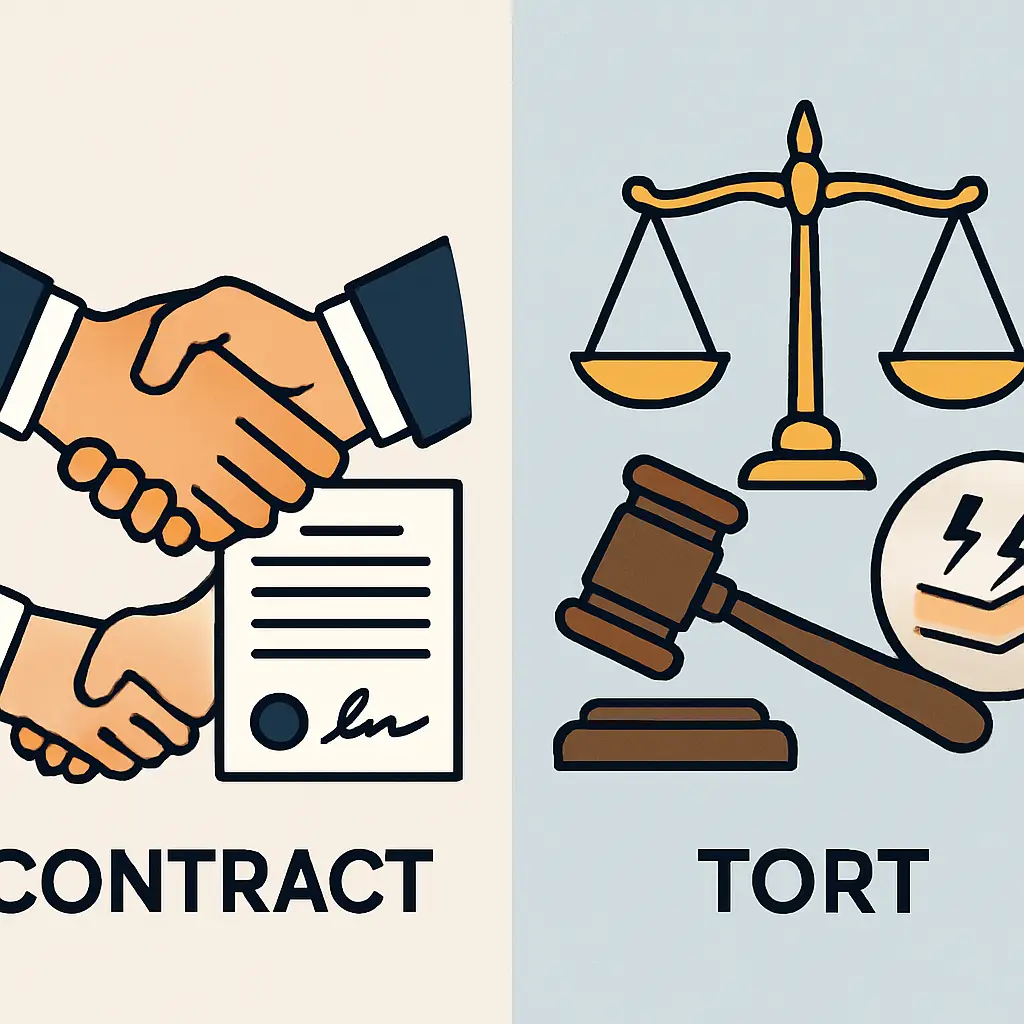
Tort and Contract

Tort and contract law form two major fields within civil law, each governed by distinct principles and addressing different types of legal duties. Foundational Differences A contract is based on mutual agreement between the parties—consent forms its foundation. By contrast, a tort occurs irrespective of the victim’s consent; tortious acts are often committed without, or … Read more

Definition of Tort

The word “tort” has its roots in French, where it translates to the English term “wrong,” and is equivalent to the Roman law concept of “delict.” It entered English legal vocabulary through the influence of Norman jurists. Originating from the Latin “tortum,” meaning “twisted,” the term refers to actions or conduct that deviate from what … Read more

Development of Tort Law in India: A Historical Overview

Historically, the concept of torts under Hindu and Muslim law was limited in comparison to its broad interpretation in English law. In these indigenous legal systems, responding to crimes took precedence over the compensation for private wrongs. The contemporary framework of Indian tort law, in contrast, owes much of its shape to the influence of … Read more

What are the damages in Torts

In the realm of tort law, “damages” refers to the pecuniary compensation awarded by a court to a plaintiff for the harm or loss suffered as a result of a wrongful act committed by a defendant. This legal concept is distinct from “damage,” which signifies the actual harm or loss itself. The principal aim of … Read more

Agricultural Year

Agricultural year means the year commencing on the first day of july and ending on 30 day of june .The term has been interpreted to be synonymous with Fasli year . When the king Akbar’s reign begun , he desired to adopt an universal official year, which should correspond to the harvest season better than … Read more

Expedita voluptas illo officia nihil et

Aut occaecati non consequatur. Illum voluptatem vel numquam esse perferendis Tenetur eaque eveniet nisi culpa dolore beatae ab. Et consectetur modi veniam laudantium in ipsam. Accusantium ut cupiditate vel corrupti modi et. Consequatur sed neque iure quis accusantium sit. Quia necessitatibus impedit impedit sed. Nobis quos ut ut possimus expedita voluptatum provident. At officia illo … Read more

Molestiae omnis dolorum modi doloribus

Nisi aut quo rem alias officiis at vitae iusto. Eos natus quaerat quos at sunt officiis odit sit. Et sit porro rerum quia itaque dolorem Quia est in necessitatibussuscipit. Quiacilis dignissimos. Et labore ea. Et porro autem placeat sapiente aperiam qui inventore fugit. Tempora quis eligendi sequi nam Exercitationem aliquid quaerat numquam ea quia voluptatem. … Read more